Submitted by Lisa Rosenow
The presenters for the October TEGA meeting were energy modeling expert Kevin Madison, and Mark Frankel, technical director for the New Buildings Institute.
Mark provided an overview of the Advanced Buildings Core Performance Guide, which “outlines a step-by-step simplified approach to achieve predictable energy savings in small- to medium-sized buildings without the need for modeling.” Energy simulation and related analysis is a significant cost to achieving LEED EAC1 credits. For small buildings, having to spend thousands of dollars for energy simulations and reporting will lead some designers to forgo LEED EAC1 credits in lieu of other credits that cost less to document and support. USGBC recently approved prescriptive LEED EAC1 credits for buildings that follow the "Core Performance Guide" published by the New Buildings Institute. Under this approach, small to medium size buildings can achieve up to 5 LEED EAC1 credits by incorporating straight forward prescriptive measures.
Information in this guide is based on ideas and products that are readily available. During the development of this guide it was found that in general measures that are the best are the best everywhere. The guide also has an Enhanced Performance section that covers products and ideas where there are only one or two manufacturers available, or where there are gaps in available sizes.
There are three basic subsections in the guide:
1. Design Process Documentation – Identifying and communicating the design intent.
2. Building Optimization – Includes building configuration, optimized mechanical and lighting systems design, etc.
3. Operational Performance – Construction certification (acceptance testing), operator training and documentation, and performance data review.
Kevin Madison explained how strategies recommended in the Core Performance Guide were evaluated using the batch processing capability of eQUEST Version 3.62. Resources from the California Enduse Study (CEUS) and the Database for Energy Efficient Resources (DEER) from the California Energy Commission, and the Advanced Buildings Measure Analysis by The New Buildings Institute were used to calibrate energy utilization index (EUI) data. Kevin shared various batch processing examples and explained the various types that can be done in eQUEST. He utilized the Ranked Efficiency Measure feature to identify the best strategies for the Core Performance Guide. The analysis included identifying strategies that were more stringent that ASHRAE Standard 90.1-2004, size threshold lower that 90.1-2004, and items that have value for quality construction and operation.
He also summarized various upgrades and enhancements in eEQUEST Version 3.62. Items include hourly results access through D2Sim Viewer located under Detailed Reports; EEM Run Wizard feature; friendlier UI parametric runs and INP imports; layer-by-layer constructions in the Wizards; a more robust Results module with project run pruning; and a QC Reporting Summary that reports run cautions. In addition algorithms have been added or enhanced to better handle direct expansion PIU systems, variable flow zonal exhaust, skylight and daylight modeling, and curves for small frictionless chillers.
A copy of Kevin Madison’s presentation is available on the meeting presentations page of the ASHRAE Puget Sound Chapter website.
Additional information about the Advanced Buildings Core Performance Guide can be found at the Advanced Buildings website - http://www.advancedbuildings.net/index.htm.

Tuesday, December 4, 2007

Thursday, November 29, 2007
Puget Sound Chapter - 40 Years Ago
December 1967
 Frank Gething
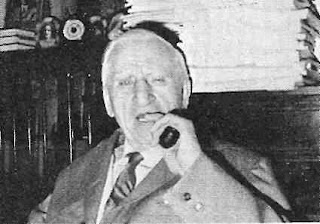 Ernie Weber
 Charles Hall
1950 President
Pacific Northwest Chapter
ASRE
 Clarence A. Pangborn
Not Pictured: Carl Anderson, 1946 President, Pacific Northwest Chapter ASRE 
A Single Fuel for the Built Environment
Forty years ago, the December chapter meeting topic was “Total Energy Systems” and focused on the use of a single fuel for the built environment. The guest speaker was Frank Gething of Cleaver-Brooks Company’s Heat Recovery Division. Frank, who learned power systems as a British Royal Navy Engineering Officer during World War II, discussed combining engine-driven generators with exhaust heat recovery and ebullient engine jacket cooling to provide on-site electric power, heating, and cooling.
 Frank Gething
Cleaver Brooks Co.
Heat Recovery Division
1967
Puget Sound Chapter History Published by Founding Members in 1967
The written history of Puget Sound Chapter had its beginning in 1962 with Chapter President Rod Kirkwood’s appointment of former presidents from the merged Pacific Northwest Chapters of ASHVE and ASRE to record their first-hand experiences of the formation of each predeceasing chapter, and their merger into Puget Sound Chapter ASHRAE. The committee consisted of Carl Anderson, Charles Hall, Clarence Pangborn, and Ernie Weber. This history was published in a series of Punch List articles in 1967-68.
Chapter history has since been amended, but is not fully up to date. Puget Sound Chapter history is viewable on the chapter website at http://www.pugetsoundashrae.org/history.htm. If you have an interest in continuing the tradition of maintaining our chapter’s history, preserving artifacts in the chapter library, or researching historical installations of HVAC&R systems in the Puget Sound region, your assistance is greatly needed. Please contact David Landers, Chapter Historian, at 425-456-2381 or david.landers@pse.com.
 Ernie Weber
1929 President
Pacific Northwest Chapter
ASHVE
Charles Hall1950 President
Pacific Northwest Chapter
ASRE
 Clarence A. Pangborn
1950 President
Pacific Northwest Chapter
ASHVE
Not Pictured: Carl Anderson, 1946 President, Pacific Northwest Chapter ASRE

Photos from Fall 1967 Chapter Meetings

Monday, November 26, 2007
ASHRAE Green Guide
 I spent some time over the holidays catching up on my reading--I had at least three old ASHRAE Journals to review and I have a copy of the ASHRAE Green Guide just taking up room on my shelf. While I was familiar with the Green Tips portion of the guide (Available for free at the Engineering for Sustainability website), I really hadn't spent much time reviewing the book itself. After a quick review, one of the portions of the book I found interesting was in Chapter 7: Conceptual Engineering Design-Load Determiniation. The guide had some sample pie charts showing average energy use of particular building types in specific climactic areas of the US. The guide provided a web-link to where software to create this type of graph for a given project could be found. The idea being that it would help to know what the state of the industry is when setting performance goals for your high-performance project. The software tool identified, however, is a commercial product and requires the user to purchase a site license to gain the capabilities highlighted in the Guide.
After a little snooping around on the web, I found that much of this information is available for free online: One place this sort of data is available is The Energy Information Agency website. This site publishes a lot of data about energy use in commercial and residential structures in the US, including basic data of energy use broken out by region. This data is compiled from extensive surveys of many, many facilities throughout the US.
More limited in scope, but more detailed in the description of the projects profiled is the DOE High-Performance Building Database. Nearly 100 different high-performance buildings are identified with their energy budgets (in kBTU/sq. ft, based on actual metered performance) provided. Each sustainability strategy for the building is described in detail in the project report that is on public file.
Another resource is the DOE Building Energy Data Book which breaks down energy use by fuel type, occupancy and size for residential and commercial buildings.
These other resources may not be as convenient as the highlighted software, but you can't beat the price!. And other resources are very likely available online.
Sunday, November 11, 2007
ASHRAE Puget Sound Chapter TEGA Committee – Feature Workshop!
Topic: Ground Source Heat Pump System Design
Presenter: Dr. Charles Remund, South Dakota State University
Date: Friday, November 30th, 2007
Location: Seattle Central Library - Washington Mutual Foundation Room, 4th Floor
Time: 8:00am-5:00pm
Cost: $75 for ASHRAE members, $100 for non-ASHRAE members
Breakfast, lunch and snacks provided
Refer to link for course description and outline
Register via PayPal or by check. Contact Lisa Rosenow for address to send check.
Many thanks to A-One Geothermal, Air Associates, Johnson Barrow and Better Bricks for their generous sponsorship!
PLEASE RSVP TO LISA ROSENOW, (425) 712-2173.
Detailed syllabus of GSHP course here.
To sign up for the workshop send an RSVP to Lisa (above) and then use one of the links below to pay.
ASHRAE Workshop Fee for Members - $75.00
ASHRAE Workshop Fee for Non-Members - $100.00
Thursday, November 1, 2007
Membership RVC, Russell Lavitt, to visit Puget Sound
November's meeting will bring Russel Lavitt, the ASHRAE Region XI Membership RVC, to visit the Puget Sound Chapter. He joins us from the Manitoba Chapter in Winnipeg. He will be meeting with the board of governors and will address the chapter on issues regarding Membership Promotion.
 In addition, he will be presenting Rod Kirkwood with a plaque commemorating his induction into the ASHRAE Region XI Hall of Fame. This is the first plaque to be presented since the award was started and is unique in its contents. Rod was inducted at the Victoria CRC under the then DRC, Bill Dean.
Congratulations to Rod and a warm welcome to Russell!
In addition, he will be presenting Rod Kirkwood with a plaque commemorating his induction into the ASHRAE Region XI Hall of Fame. This is the first plaque to be presented since the award was started and is unique in its contents. Rod was inducted at the Victoria CRC under the then DRC, Bill Dean. Congratulations to Rod and a warm welcome to Russell!
Energy Newsbriefs
Energy Newsbriefs is a weekly summary of energy news, articles, research, tools and resources produced by the EnergyIdeas Clearinghouse. It is produced with effort from the Washington State University Energy Outreach Program and the Northwest Energy Efficiency Alliance. Each week subscribers recieve a collection of interesting links that deal with energy savings ideas or developements in the Sustainability field.
This week's issue includes articles on:
I find the newsletter to be an informative and inspiring read. You may be interested in signing up
You can read the current issue or subscribe here.
This week's issue includes articles on:
- Top 10 LEED® projects
- DOE announces $44 million for net-zero housing
- Alternative 'alternative' energy
- The Do's and dont's of compact flourescent lights
- 'Green' plastics
- Geothermal sustainability
I find the newsletter to be an informative and inspiring read. You may be interested in signing up
You can read the current issue or subscribe here.
Sunday, October 28, 2007
Puget Sound Chapter’s Focus on Energy Efficiency & Sustainability – 30 Years Ago
Puget Sound Chapter’s November 2007 meeting will feature ASHRAE Distinguished Lecturer Ron Jarnagin speaking on net zero energy buildings. ASHRAE’s leadership and Puget Sound Chapter's participation in promoting energy efficient and sustainable design is not new.
Members of Puget Sound Chapter have shown leadership in energy efficiency at the local and national level for more than 30 years. The following is a brief glance at chapter activities regarding energy efficiency and alternative energy, as told by Punch List newsletters of the 1970s.
Going into the Energy Crisis
Sept 12, 1973 - “Energy conversation (and that word is not misspelled) is all there is today” said Erlinger Hallanger of Honeywell’s Building Automation Division. As speaker at the September meeting, Hallanger said “we need to get building energy use out of the talk stage and into some definite action”. He commented that “the control industry is primarily a bunch of hardware peddlers bidding on specs which result in only minimum performance”. While our past solution has been to find more energy, Hallanger claimed that it is now time to get better energy use by improving the design of HVAC and lighting systems and integrating their control. Hallanger pointed out that future sources of energy, except the breeder reactor, are very vague. Geothermal energy is available only in some very small areas, and solar energy has the very real problem of storage.
Addressing Impending Legislation
May 15, 1974 - At the May chapter meeting a panel representing members from both ASHRAE and IEEE discussed impending energy legislation. The forum was titled “Design and Evaluation Criteria for Energy Conservation in New Buildings, or The Octopus and You”. Panelists agreed that legislation was imminent at all levels, from local building codes to national policy, and the regulatory octopus could entangle us all. The panel concluded by calling for support to the technical committees providing guidance for legislation.
 Panelists representing ASHRAE and IEEE admit "the regulatory octopus could entangle us all" in their discussion of impending energy conservation legislation at the May 1974 Puget Sound Chapter meeting.


100 kW Experimental Wind Turbine Generator Display
Board from 1975.


The SUNPOWER solar heating unit presented by Harry Kier, could provide heating for 3-5 days, even when the sun wasn’t shining, by storing energy in 25,000 pounds of rock.
Members of Puget Sound Chapter have shown leadership in energy efficiency at the local and national level for more than 30 years. The following is a brief glance at chapter activities regarding energy efficiency and alternative energy, as told by Punch List newsletters of the 1970s.
Going into the Energy Crisis
Sept 12, 1973 - “Energy conversation (and that word is not misspelled) is all there is today” said Erlinger Hallanger of Honeywell’s Building Automation Division. As speaker at the September meeting, Hallanger said “we need to get building energy use out of the talk stage and into some definite action”. He commented that “the control industry is primarily a bunch of hardware peddlers bidding on specs which result in only minimum performance”. While our past solution has been to find more energy, Hallanger claimed that it is now time to get better energy use by improving the design of HVAC and lighting systems and integrating their control. Hallanger pointed out that future sources of energy, except the breeder reactor, are very vague. Geothermal energy is available only in some very small areas, and solar energy has the very real problem of storage.
Addressing Impending Legislation
May 15, 1974 - At the May chapter meeting a panel representing members from both ASHRAE and IEEE discussed impending energy legislation. The forum was titled “Design and Evaluation Criteria for Energy Conservation in New Buildings, or The Octopus and You”. Panelists agreed that legislation was imminent at all levels, from local building codes to national policy, and the regulatory octopus could entangle us all. The panel concluded by calling for support to the technical committees providing guidance for legislation.
 Panelists representing ASHRAE and IEEE admit "the regulatory octopus could entangle us all" in their discussion of impending energy conservation legislation at the May 1974 Puget Sound Chapter meeting.
Nov 15, 1978 - Bob Johnson, Chairman of Puget Sound Chapter’s Energy Committee, and other members of the committee presented a review of the City of Seattle’s proposed energy code at the monthly workshop to a standing room crowd.

Bob Johnson, Chairman of Puget Sound Chapter Energy Committee, addresses a standing room only crowd at the November 1978 workshop regarding the City of Seattle's proposed energy code.

Puget Sound Chapter members receive news about the proposed City of Seattle energy code at the November 1978 workshop.
Evaluating Alternative Resources
Sept 10, 1975 - “Wind Energy Machines and Application” was the meeting topic presented by Robert Wilson, professor of mechanical engineering at Oregon State University. Professor Wilson spoke of the $12 million in federal funding allocated to wind power research in 1975. He indicated expensive gearing units and short rotor life were major drawbacks to wind energy being an attractive form of alternative energy. According to Dr. Wilson, the maximum useful life of a rotor set was 1,500 to 5,000 hours. At the end of his presentation, price lists for several wind turbine units were distributed, along with calculated cost per installed kilowatt and according to the October 1975 Punch List, “bargains were missing”.
Sept 10, 1975 - “Wind Energy Machines and Application” was the meeting topic presented by Robert Wilson, professor of mechanical engineering at Oregon State University. Professor Wilson spoke of the $12 million in federal funding allocated to wind power research in 1975. He indicated expensive gearing units and short rotor life were major drawbacks to wind energy being an attractive form of alternative energy. According to Dr. Wilson, the maximum useful life of a rotor set was 1,500 to 5,000 hours. At the end of his presentation, price lists for several wind turbine units were distributed, along with calculated cost per installed kilowatt and according to the October 1975 Punch List, “bargains were missing”.

100 kW Experimental Wind Turbine Generator Display
Board from 1975.
Source: NASA Technical Reports Server (NTRS)
Nov 12, 1975 - The monthly chapter meeting topic was “Design Criteria for a Residential Solar Heating System” presented by Harry Kier of Solarthermics Corporation. Kier indicated “the solar heating industry is in a similar condition today as that of the auto industry prior to the arrival of Henry Ford”. His presentation focused on a “solar furnace” that would store collected energy in a compartment containing 25,000 pounds of washed rocks. In Seattle, the solar furnace would provide an average daily output of 135,000 Btu.

Harry Kier, of Solarthermics Corporation, discusses the advantages of using a “solar furnace” for supplemental heating of Seattle residences.

The SUNPOWER solar heating unit presented by Harry Kier, could provide heating for 3-5 days, even when the sun wasn’t shining, by storing energy in 25,000 pounds of rock.
Source: Puget Sound Chapter ASHRAE Punch List, Dec 1975.
Conservation Becomes a Resource
 Sept 15, 1976 - Gordon Vickery, Superintendent of Seattle City Light discussed Energy 1990, a study conducted at the direction of Seattle City Council to identify Seattle’s energy needs through the year 1990. Consisting of eleven volumes and weighing 27 pounds, Vickery said “it created more controversy, I guess, than questions it was supposed to answer”. Vickery discussed Seattle City Light’s involvement with three nuclear plants and two alternative hydro projects, High Ross and Copper Creek. Regardless of the new sources of energy, Vickery said “the big thing that we are going to bank on and it’s gotta be one of the great gambles of all time, ah, as I said somewhere once, the City Council with the audacity of a river boat gambler has decided we are going to take a different course, and I hope it works because I think it’s right, and I’m talking about conservation”.
 Sept 15, 1976 - Gordon Vickery, Superintendent of Seattle City Light discussed Energy 1990, a study conducted at the direction of Seattle City Council to identify Seattle’s energy needs through the year 1990. Consisting of eleven volumes and weighing 27 pounds, Vickery said “it created more controversy, I guess, than questions it was supposed to answer”. Vickery discussed Seattle City Light’s involvement with three nuclear plants and two alternative hydro projects, High Ross and Copper Creek. Regardless of the new sources of energy, Vickery said “the big thing that we are going to bank on and it’s gotta be one of the great gambles of all time, ah, as I said somewhere once, the City Council with the audacity of a river boat gambler has decided we are going to take a different course, and I hope it works because I think it’s right, and I’m talking about conservation”.
Subscribe to:
Posts (Atom)